Sudan Army Advances: What It Means for West Darfur's RSF Stronghold
- christoskyrou
- 7 hours ago
- 3 min read
The conflict in Sudan’s West Darfur region has entered a critical phase as Sudan’s army moves closer to the Rapid Support Forces (RSF) stronghold. This development marks a significant shift in the ongoing struggle for control in the area, with implications for the local population, regional stability, and the broader political landscape in Sudan. Understanding the background, current situation, and potential outcomes of this military advance is essential for grasping the future of West Darfur and the country as a whole.
Background of the Conflict in West Darfur
West Darfur has long been a hotspot for conflict due to ethnic tensions, competition over resources, and political rivalries. The RSF, a paramilitary group originally formed from the Janjaweed militias, has played a controversial role in the region. While the RSF was integrated into Sudan’s security apparatus, it has often operated with considerable autonomy and has been accused of human rights abuses.
The recent clashes between the Sudanese army and the RSF are part of a broader power struggle following the 2021 military coup and the fragile transition process. The RSF’s control over parts of West Darfur has allowed it to maintain influence, but the army’s push to reclaim these areas signals a decisive attempt to reassert state authority.
The Current Military Advance
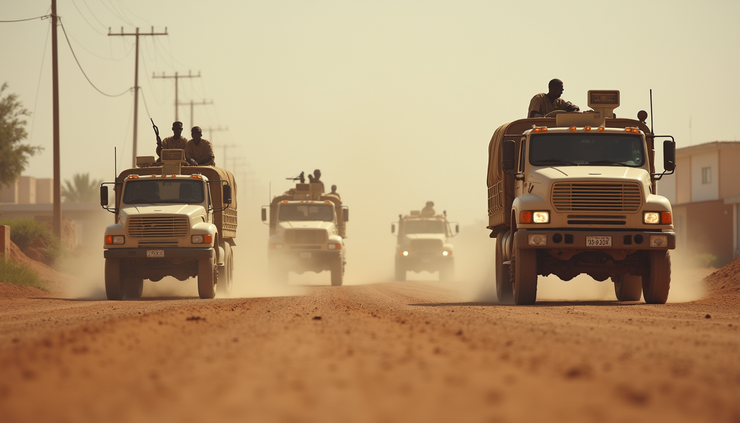
Sudan’s army has reportedly closed in on the RSF’s stronghold in West Darfur, intensifying clashes in and around key towns. This advance involves coordinated ground operations supported by artillery and air strikes. The army’s objective is to dismantle the RSF’s bases and cut off their supply lines.
This military movement is complex due to the terrain and the presence of civilians. West Darfur’s landscape includes vast deserts, small towns, and scattered villages, making urban and rural combat challenging. The army’s progress depends on securing strategic locations such as roads, communication hubs, and supply routes.
Impact on Civilians and Humanitarian Concerns
The fighting has severely affected civilians in West Darfur. Thousands have been displaced, seeking refuge in camps or neighboring regions. Access to food, water, and medical care has become increasingly difficult. Humanitarian organizations face obstacles delivering aid due to insecurity and logistical challenges.
The advance of the Sudanese army raises concerns about potential civilian casualties and further displacement. Both sides have been accused of targeting non-combatants in past conflicts, making protection of civilians a critical issue. International calls for ceasefires and safe corridors for aid delivery have intensified.
Political Implications for Sudan
The battle for West Darfur is not just a military confrontation but also a political contest. The Sudanese army’s push against the RSF reflects deeper tensions within Sudan’s ruling elite. The RSF’s leader, Mohamed Hamdan Dagalo (known as Hemeti), wields significant power and has political ambitions that challenge the traditional military hierarchy.
If the army succeeds in weakening the RSF’s hold in West Darfur, it could shift the balance of power in Khartoum and influence the country’s transition to civilian rule. Conversely, prolonged fighting risks destabilizing the fragile peace process and could lead to wider conflict.
Regional and International Reactions
Neighboring countries and international actors are closely monitoring the situation. West Darfur borders Chad and the Central African Republic, making the conflict a potential source of regional instability. Refugee flows and cross-border violence could escalate if the fighting intensifies.
The African Union, United Nations, and other international bodies have urged restraint and dialogue. They emphasize the need for a political solution that addresses the root causes of conflict and promotes reconciliation. Sanctions and diplomatic pressure on armed groups may increase depending on developments.
What Comes Next for West Darfur?
The coming weeks will be crucial in determining the future of West Darfur. The Sudanese army’s advance could lead to the collapse of the RSF’s presence in the region, but it may also provoke fierce resistance and prolonged conflict. Key factors to watch include:
The ability of the army to maintain supply lines and avoid civilian harm
The RSF’s response and potential for counterattacks
Humanitarian access and protection of displaced populations
Political negotiations involving Sudanese leaders and international mediators
The outcome will shape not only West Darfur’s security but also Sudan’s broader path toward peace and stability.


Comments